
Nelum and Ronit were friends long before they teamed up to create Whole Food Revolution. Their shared passion for healthy, wholesome living inspired them to combine their expertise and bring their vision to life.
With warmth, a sense of fun, and a genuine love for teaching, Nelum and Ronit are dedicated to helping you transform your relationship with food. Whether it’s through practical tips, heartfelt support, or empowering guidance, they’re here to make your journey enjoyable and rewarding.
Join them and discover how to live, cook, and eat in a way that feels good for your body and soul!
Welcome to this foundational section on cholesterol, one of the most misunderstood yet essential substances in your body.
In this module, you’ll learn:
What cholesterol actually is — and why your body can't function without it
Why cholesterol is crucial for building hormones, brain health, cell membranes, and more
Where cholesterol comes from — separating facts from fiction about cholesterol in food
How your body makes its own cholesterol — and how this process is influenced more by insulin and sugar than by dietary fat
By the end of this section, you’ll understand how cholesterol works with your body (not against it), and why it’s time to rethink everything you thought you knew about it.
Ever wondered how fat and cholesterol move through your bloodstream without clogging everything up? Since they don't mix with water (and your blood is mostly water!), your body has a clever system of special delivery vehicles to get the job done.
These vehicles are called lipoproteins—and they come in different shapes and sizes, each with a unique job. From cargo ships to clean-up patrols, they make sure your cells get the fat and cholesterol they need, while keeping your system running smoothly.
Ready to meet the crew?
Not all cholesterol profiles tell the same story—and the context matters more than ever in today’s diverse dietary landscape.
In this section, we’ll unpack how lipid markers can shift in response to low-carb and ketogenic diets, especially in individuals known as Lean Mass Hyper-Responders (LMHRs). We’ll also explore the concept of Atherogenic Dyslipidaemia—a dangerous lipid pattern often seen in insulin resistance and metabolic syndrome.
You’ll learn why focusing solely on total or LDL cholesterol may miss the bigger picture, and how factors like triglyceride levels, HDL, particle size, and overall metabolic health change the meaning behind your lipid numbers.
This module is designed to help you go beyond the outdated “good vs bad cholesterol” framework and understand what lipids are really telling you—based on your body, your diet, and your health status.
In this section, you'll learn how to interpret your lipid panel—often referred to as a cholesterol test. We'll go beyond total cholesterol to explain the importance of triglycerides, HDL (good cholesterol), LDL (commonly called “bad” cholesterol), and the powerful triglyceride-to-HDL ratio. You'll discover how lifestyle choices like diet, exercise, and medication affect these numbers, and how they can help predict your heart and metabolic health.
Note: All blood tests shown were done after a 12-hour fast (but no longer than 15 hours) to ensure accurate results.
For years, LDL cholesterol has been labelled the “bad cholesterol.” But is it really the villain we've made it out to be? In this section, we’ll take a closer look at LDL’s real role in the body, why it often shows up during health crises like heart attacks, and how context—not just cholesterol levels—matters most.
We’ll also introduce a lesser-known but important player in the lipid story: Lipoprotein(a), or Lp(a)—a close cousin of LDL that has a reputation of its own.
By the end of this section, you'll understand:
Why LDL is present at the scene of damage, but that doesn’t mean it caused it
How LDL’s long half-life makes it more likely to be noticed (and blamed)
What Lp(a) is, and why it may have been confused with LDL in earlier research
This section explores a surprising body of research that challenges the conventional belief that high LDL cholesterol always leads to heart disease and shorter life. You’ll learn about what recent data shows regarding LDL levels, longevity, and immune function—especially in older adults. We’ll also look at global mortality data and discover what it reveals about cholesterol and health outcomes.
We’ve been told for decades that cholesterol—especially LDL—is the main culprit behind heart disease. But what if the story is more complex?
In this section, we’ll dig into two powerful and evidence-based hypotheses that go beyond the old narrative:
The Thrombogenic Hypothesis – the idea that heart disease is driven by repeated damage and blood clot formation in the arteries.
The role of Lipoprotein(a) and small, dense LDL particles – lipoproteins that are stickier, more inflammatory, and more likely to promote plaque buildup and clotting.
You’ll learn why inflammation, clotting, and lipoprotein particle type may matter more than total cholesterol alone—and how this shifts the way we understand cardiovascular risk.
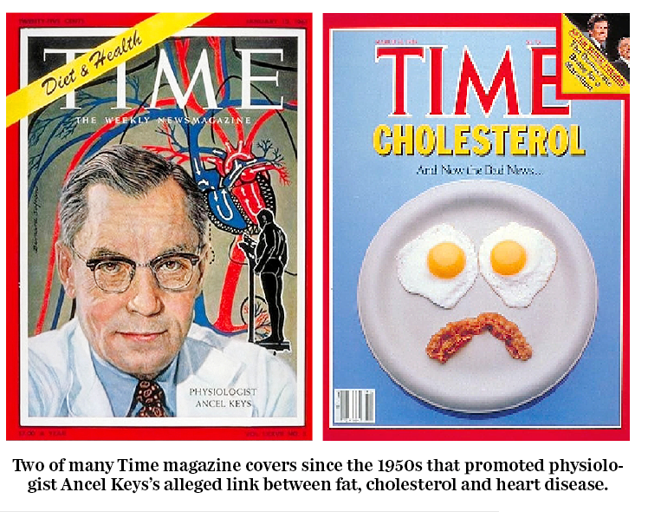
In this section, we’ll uncover the history of cholesterol research and how early studies led to decades of dietary guidelines focused on fat and cholesterol reduction. You’ll learn about key figures like Ancel Keys, the famous Seven Countries Study, and how evolving research is shifting our understanding of cholesterol and heart disease today.
In this section, we explore the rise of statin medications and the science that has supported their widespread use. You’ll learn how statins work, why they became the go-to treatment for lowering cholesterol, and the critical difference between relative risk and absolute risk—an often-misunderstood concept that changes how we interpret the data.
We also challenge the idea that LDL cholesterol is always the villain, and explore whether our focus on cholesterol-lowering has sidetracked us from addressing the root causes of heart disease.
Discover the truth about cholesterol from a mindset perspective. This 3-part series helps women and wellness seekers release outdated fears about fat, understand why even doctors struggle to change their beliefs, and build confidence to trust their body’s wisdom again. Ideal for anyone transitioning to a whole food lifestyle and healing their health naturally.

Investing in your health is one of the most rewarding decisions you can make. Whether you’re exploring self-paced online courses or attending face-to-face workshops, gaining more knowledge equips you with the tools to make informed, sustainable changes. Learning at your own pace allows you to integrate habits gradually, while in-person experiences offer hands-on guidance and connection with like-minded individuals. Whichever path you choose, remember that every bit of knowledge brings you closer to your health goals. Start your journey today—your future self will thank you!

At Whole Food Revolution, we’re excited to deliver information and support in a fresh, new way. While this online course is a new offering, we’ve been running face-to-face and online programs for several years, consistently receiving excellent feedback from our participants.
Our Commitment to Transparency and Integrity
As a regulated health service provider, we follow the Australian Health Practitioner Regulation Agency (Ahpra) guidelines for advertising. These guidelines ensure that all information about our services is accurate, reliable, and professional.
According to Ahpra, we are not permitted to use testimonials about our services in our advertising. This helps maintain transparency and keeps the focus on evidence-based practices. While we cannot share testimonials directly, you can still explore inspiring stories and feedback on external platforms, such as our Google Reviews page, as these are not regulated by Ahpra.